Ready when you are.
Cue listens while you talk and taps when you need to pause, slow down, or speak up.
Your audio goes to Deepgram to be transcribed. Cue doesn’t store it.
Cue learns you
How it works →Cue hasn’t heard you yet
Every session teaches it something, and the next one is coached differently because of it.
Learns your pace
Not yet. after your first session
Picks your focus
Not yet. after 2 sessions
Finds your patterns
Not yet. after 3 sessions
Tests its own taps
Not yet. from session 4
Simulated sessions go to a separate practice memory, so they never teach Cue about you.
Your focus
Cue picks one skill to work on after your first two sessions, from what it hears. You can choose one now if you know what you want.
Speak-up cues start once you set your conversation volume.
What each tap means. Select one to feel it.
The device
Loading the device…
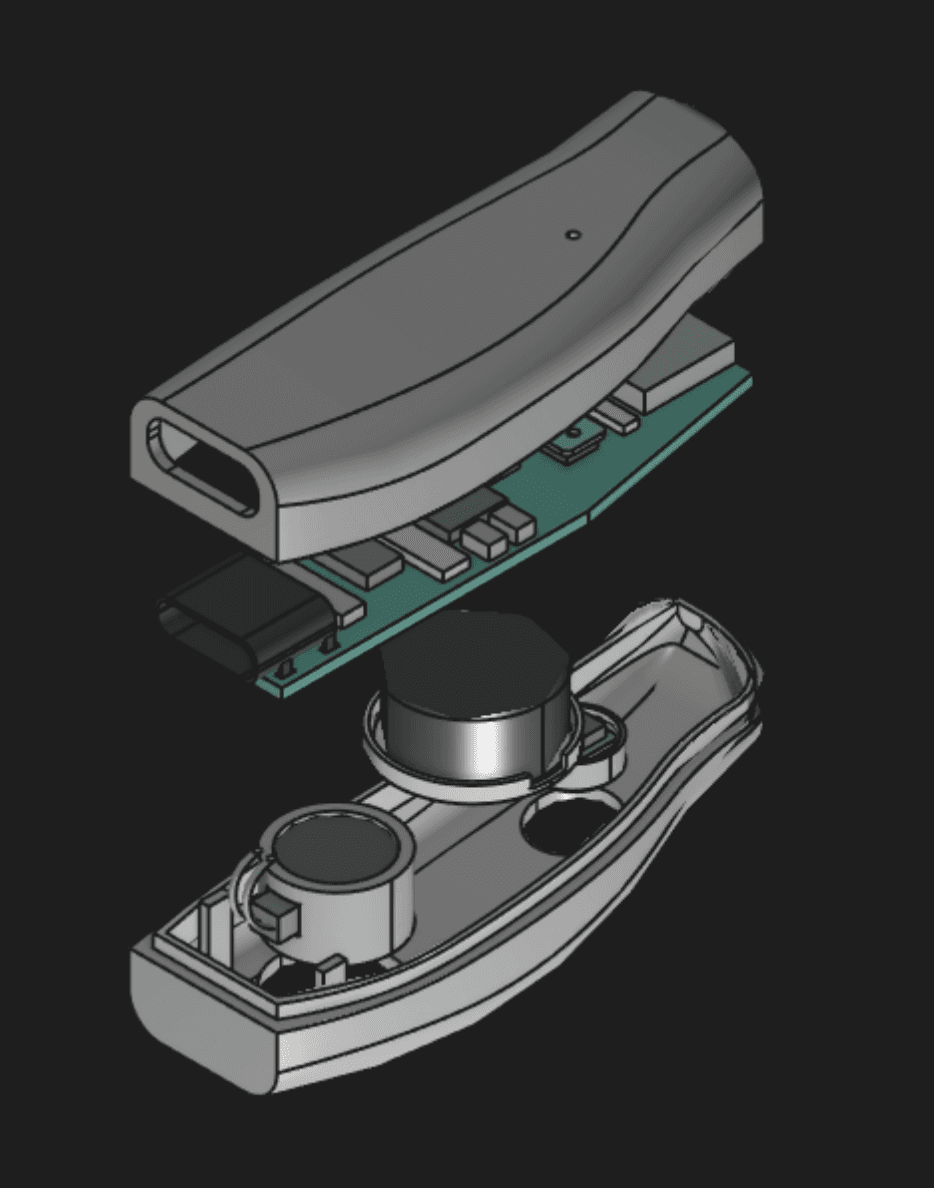
Cue’s behind-the-ear (BTE) device, from its CAD. Taps leave the motor behind your ear; drag to turn it.
Inside the device